
By Fisayo Fakayode
MainFocus News
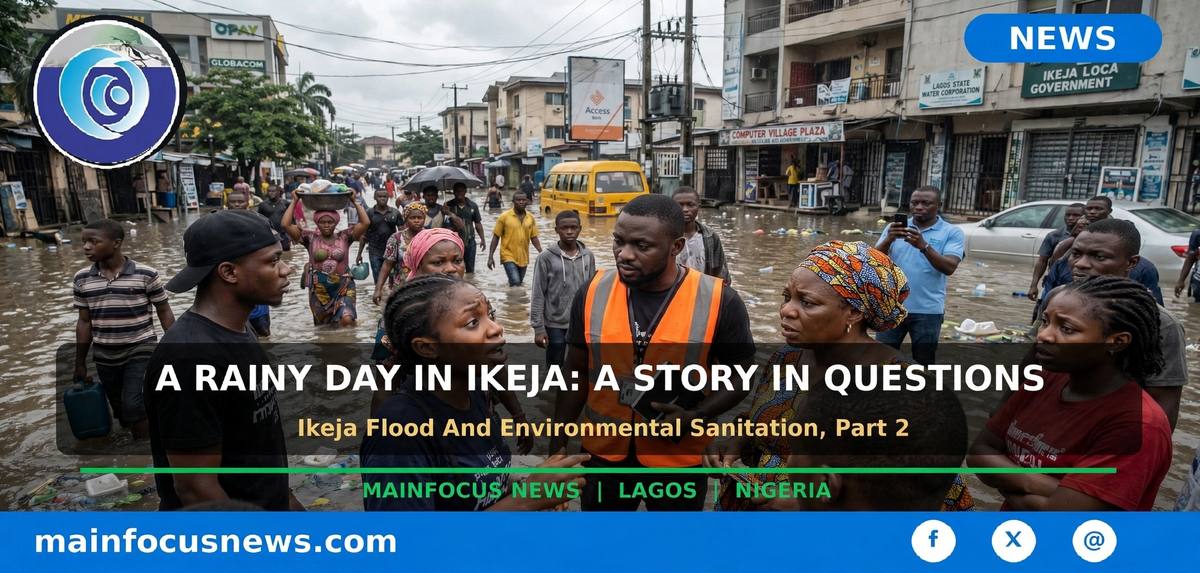
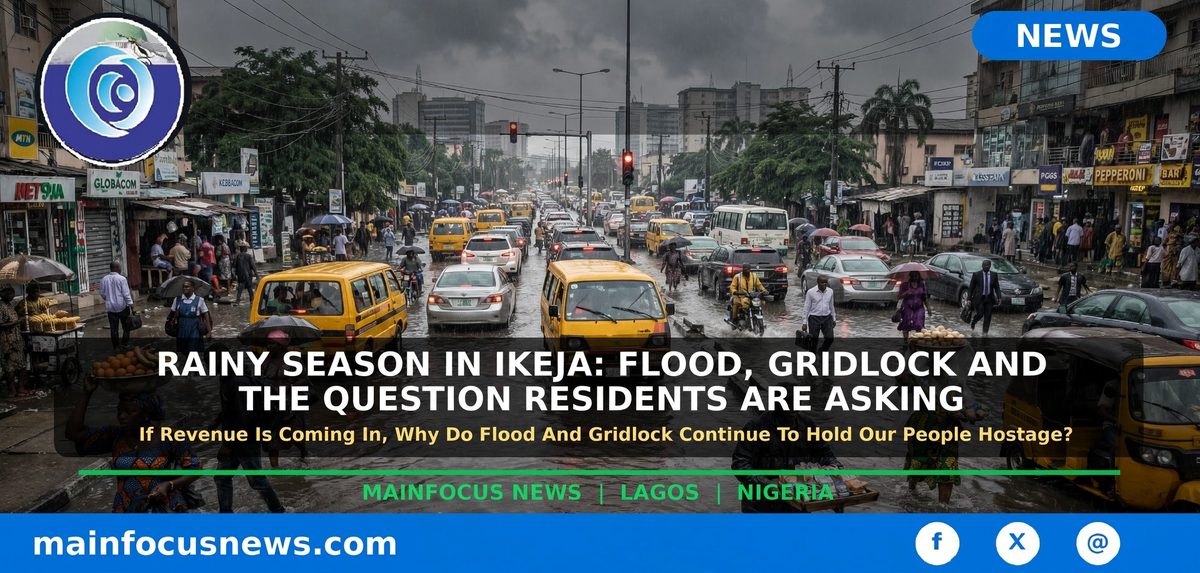
IKEJA – It started like every other rainy day in Ikeja.
The clouds gathered in the morning. The wind changed. Traders at Computer Village looked up and asked themselves the same question they ask every season:
“Will it rain heavily today? And if it does, what will happen to our street?”
By afternoon, the rain came.
On Oba Akran Road
A worker was going to Alausa. A bus stopped. Water began to gather on the road. He looked at the drain and asked:
“Why is this drain blocked again? Was it not cleared last month?”
The water had nowhere to go. It climbed onto the road. Cars slowed. Motorcycles stopped. People began to wade.
“If one drain is blocked, why must the whole road stop?”
In Anifowoshe
A shop owner opened her shop in the morning and saw water already entering from the street. She looked at the canal behind her shop and asked:
“Who dumped refuse inside this canal? Was it us, or was it left for too long without clearing?”
She swept the front of her shop, but the water kept coming.
“If we all stop dumping refuse in the canal, will the water flow freely?”
At Computer Village
Traders were arranging phones, laptops and accessories. The rain came fast. In a few minutes, the road was covered. A buyer asked a trader:
“Why does this place flood with just a small rain?”
The trader pointed to the blocked access road, the exposed cable, the heap of waste by the corner, and asked back:
“If this is the busiest market in West Africa, should it not have the cleanest drains and the safest roads?”
On Ikeja Along, Airport Road
A driver was stuck in gridlock. One breakdown had locked the entire corridor. He looked at his watch and asked:
“If one vehicle breaks down, why must everybody wait for hours? Who will come quickly to clear the road?”
Behind him, a mother was holding her child, asking:
“If it rains again tomorrow, will we pass through this same water again?”
In The Evening
The rain stopped. The water slowly went down. The streets were wet, dirty, and tired.
A young man in Ikeja looked around and asked the question that Part 2 is really about:
“What if we cleared the drains before the rain, and not after?”
“What if one report was enough – one number, one message – and somebody came quickly?”
“What if traders, residents, landlords and government worked together to keep Ikeja clean, instead of waiting for flood to remind us?”
“What if our environment was treated as a shared responsibility?”
Nobody shouted. Nobody blamed anybody. The questions were just hanging in the air, like the smell of rain after it stops.
MainFocus News will continue this story. In Part 3, we will return to the streets after the next heavy rain and ask the same questions again:
Is water still flooding your street? Is your street cleaner than before?
Which street in Ikeja floods the most during rain? What question would you ask about your street? Tell us in the comments.



Leave a Reply